
Managing hazardous waste safely requires the right combination of compliant containers, proper labeling, and an understanding of the regulations that govern storage and transport. Whether you’re handling corrosive liquids, reactive chemicals, or contaminated solids, the container you choose plays a direct role in protecting workers, facilities, and the environment. This guide walks through the essentials of hazardous waste containment and how to select the right packaging for your waste stream.
What Counts as Hazardous Waste?
Hazardous waste includes materials that can harm people or the environment due to their chemical or physical properties. It can appear as liquids, solids, gases, or sludges, and each form presents different risks. Because of this variability, containment requirements change depending on the waste’s characteristics such as ignitability, corrosivity, reactivity, or toxicity. Understanding these categories is the first step in choosing a safe and compliant container.
What Is a Hazardous Waste Container?
A hazardous waste container is any vessel designed to store, accumulate, or transport regulated waste. These containers serve one purpose: to prevent leaks, spills, and exposure. They can take the form of steel drums, plastic drums, pails, fiberboard boxes, or large IBC totes. The right choice depends on the waste’s chemical compatibility, physical state, and volume.
How Do Regulations Shape Hazardous Waste Containment?
Hazardous waste containment is governed by a strict regulatory framework that dictates how waste must be stored, labeled, and handled. These rules ensure that containers remain structurally sound, compatible with their contents, and properly identified throughout their lifecycle. Facilities must also follow accumulation limits, maintain closure requirements, and document inspections.
RCRA, EPA, and “Good Management Practices”
The Resource Conservation and Recovery Act (RCRA) and the Environmental Protection Agency (EPA) establish the standards for hazardous waste storage. They require containers to be in good condition, free of leaks, and compatible with the waste they hold. Containers must remain closed except when adding or removing waste, and most facilities must inspect their storage areas weekly. These expectations form the foundation of safe waste management.
How Do UN Packaging Codes Work?
UN packaging codes provide a universal system for identifying a container’s construction, performance level, and manufacturing details. These markings indicate the packaging type, material, hazard rating (X, Y, or Z), and the year and country of manufacture. Understanding these codes ensures that the container you choose is certified for the type of waste you’re handling and the conditions it will face during transport.
What Do DOT Placards Communicate?
DOT placards communicate the hazard class of the material being transported. They alert carriers and emergency responders to risks such as flammability, corrosivity, toxicity, or reactivity. Even when waste is properly packaged, placards provide an essential layer of safety during transit.
What Types of Hazardous Waste Containers Are Available?
Different waste streams require different container types, each with its own strengths and limitations.
Steel Drums: When Are They the Right Choice?
Steel drums are the go to option for high-hazard or high-pressure materials. Their welded, sealed construction provides exceptional durability, making them ideal for flammable liquids, solvents, and reactive chemicals. Open-head drums are used for solids and viscous materials, while closed-head drums are preferred for liquids that require a secure, tamper-resistant closure.
Plastic Drums: Why Are They So Common?
Plastic drums, typically made from high-density polyethylene (HDPE), are widely used because they resist corrosion and chemical attack. Their seamless blow-molded design prevents weak points, making them suitable for acids, bases, and many corrosive liquids. They are also lightweight and easy to handle, which reduces strain during routine operations.
Pails, Buckets, and Small Containers
Smaller containers are essential for labs, healthcare facilities, and maintenance operations where waste is generated in limited quantities. These pails may feature snap-top or screw-top lids and often carry specific UN ratings for liquids or solids. Their compact size makes them ideal for chemical residues, small-volume hazardous waste, and specialty materials.
Hazardous Waste Boxes and Fiberboard Options
Fiberboard boxes are commonly used for solid hazardous waste such as debris, PPE, and contaminated absorbents. Many feature multi wall construction and can hold as much solid waste as a 55-gallon drum. They are lightweight, stackable, and cost-effective, making them a practical choice for high-volume solid waste streams.
IBC Totes: When Do You Need Intermediate Bulk Containers?
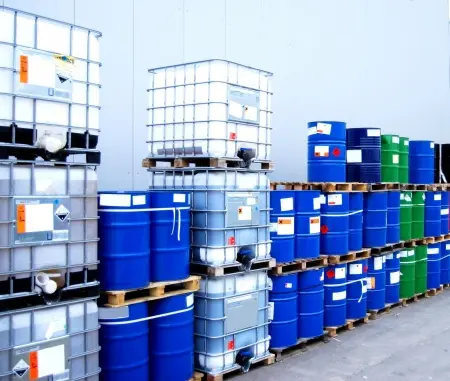
Intermediate Bulk Containers (IBCs) are designed for large-volume liquids or powders. Their steel cage and HDPE inner bottle provide both structural strength and chemical compatibility. IBCs are ideal for wastewater, bulk chemicals, and other high-volume waste streams that require efficient handling and storage.
How Are Hazardous Waste Containers Tested and Certified?
UN-rated containers undergo rigorous testing to ensure they can withstand real-world hazards. These tests simulate the stresses of transport, stacking, and handling.
What Do Drop, Leakproofness, and Pressure Tests Tell You?
Performance tests evaluate how containers behave under stress. Drop tests simulate impacts during handling. Leakproofness tests confirm that liquid waste will remain contained. Hydrostatic pressure tests ensure the container can withstand internal pressure changes. Additional evaluations such as stacking, burst, and drilling tests, identify potential failure points before containers reach the field.
Why Do Stacking and Burst Tests Matter for Real World Use?
Stacking tests replicate warehouse storage conditions, ensuring containers can support the weight of other units without collapsing. Burst tests measure the maximum internal pressure a container can withstand, which is critical for materials that may expand or off-gas. Together, these tests help prevent spills, ruptures, and environmental releases.
How Do You Choose the Right Container for Your Waste Stream?
Selecting the right container requires understanding your waste’s characteristics and the conditions it will face.
Is the Waste Liquid, Solid, Corrosive, Ignitable, or Reactive?
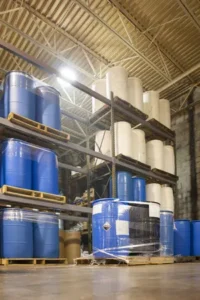
The physical and chemical properties of the waste determine the container material. Corrosive liquids typically require HDPE drums, while flammable liquids often demand steel. Solid debris may be best suited for fiberboard boxes or open head drums.
What UN Rating Does Your Application Require?
UN performance groups indicate the hazard level a container can safely hold.
- X is approved for the highest-hazard materials.
- Y covers medium-hazard waste.
- Z applies to lower-hazard materials.
Choosing the correct rating ensures compliance and reduces risk.
How Much Volume and Handling Stress Will the Container See?
Consider how the container will be stored, moved, and transported. Forklift handling, stacking height, vibration during transit, and exposure to weather all influence the durability requirements of your container.
How Should Hazardous Waste Containers Be Labeled and Identified?
Proper labeling is essential for compliance and safety. Containers must display their UN code, material type, year of manufacture, country of origin, and manufacturer code. These markings act as the container’s “birth certificate,” documenting its performance rating and ensuring traceability.
How Do Industries Use Hazardous Waste Containment Differently?
Different industries generate different types of hazardous waste, each requiring specialized containment.
Manufacturing, chemical, and mining operations often handle high-volume waste streams that may be corrosive or reactive. Healthcare and pharmaceutical facilities generate sharps, biohazards, and chemical residues that require smaller, specialized containers. Electronics and technology operations produce e-waste containing metals like lead, mercury, and cadmium, which must be packaged in solid-waste containers that prevent leakage and contamination.
What Are Best Practices for Safe Storage and Handling?
A strong containment program includes regular inspections, proper positioning, and timely replacement of aging containers. Containers should be checked for corrosion, leaks, bulging, and closure integrity. They should be stored with adequate spacing, secondary containment, and ventilation. Any container showing structural damage or illegible markings should be removed from service immediately.
Building a Reliable Hazardous Waste Containment Program
Choosing the right container, following regulatory requirements, and maintaining safe handling practices are essential for protecting people, facilities, and the environment. A well-designed containment program reduces risk, improves compliance, and ensures that hazardous waste is managed responsibly from start to finish.
Need Certified Hazardous Waste Containers?
If you’re looking to expand your product line or source compliant, high-quality hazardous waste containers, now is the time to partner with a supplier who understands regulatory requirements and industry needs. From steel drums and HDPE containers to IBC totes and UN-rated fiberboard boxes, you can offer your customers the full range of solutions they rely on.
Connect with Container Distributors today to secure certified hazardous waste containers and support your customers with safe, compliant containment options.
Leave a Reply